.png)
How I Plan a Tattoo Cover-Up: Process, Ethics, and Long-Term Results
Tattoo cover-ups are one of the most misunderstood areas of tattooing. Many people assume a cover-up is simply placing a new image over an old one.
In reality, a successful cover-up requires experience, restraint, and long-term planning that goes far beyond surface aesthetics.
This is how I approach cover-ups, and why consultations and flexibility
are essential to doing them properly.
Every Cover-Up Starts With Information
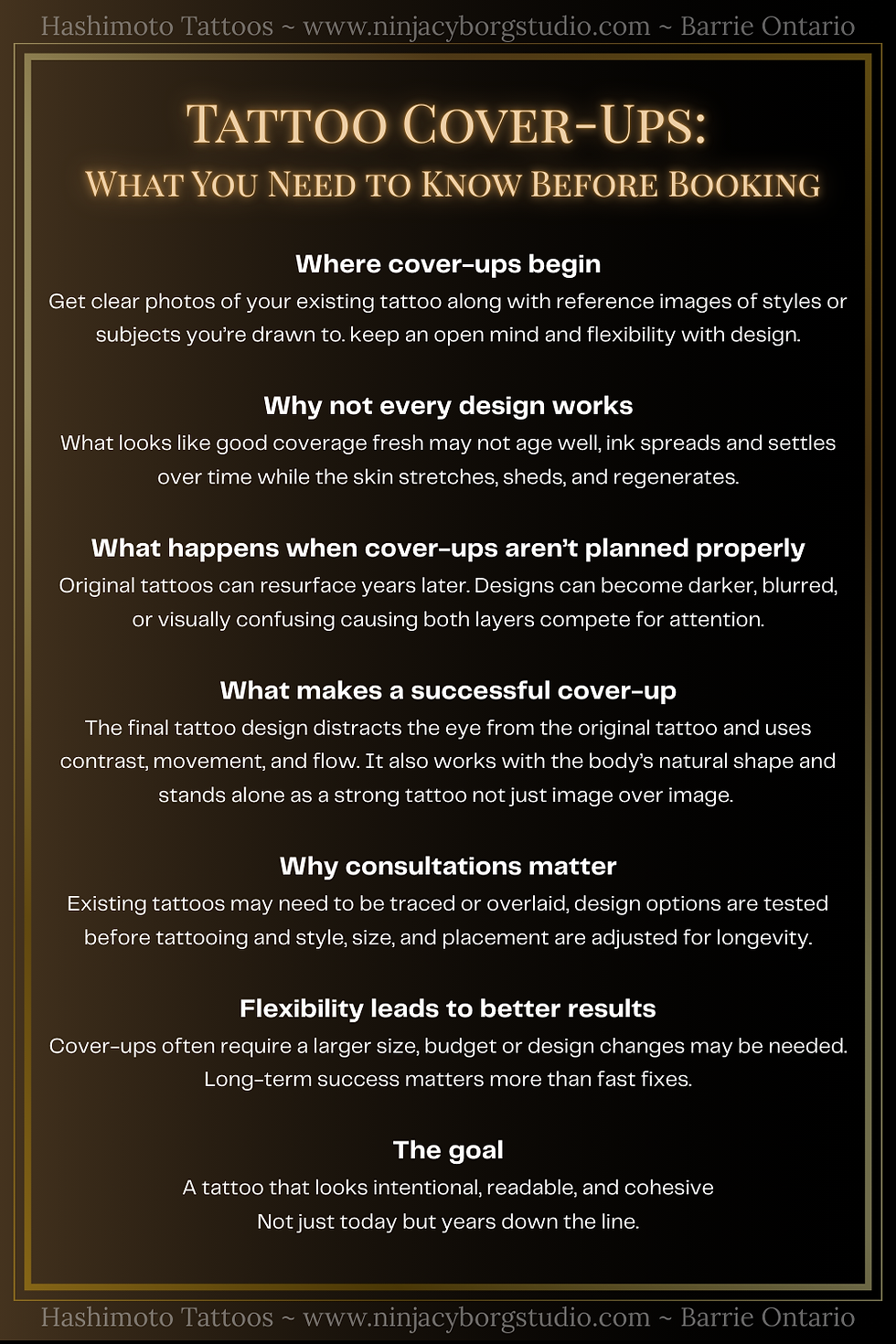
The first step in planning a cover-up is gathering clear photos of the existing tattoo. This allows me to assess ink density, age, placement, line thickness, and how the tattoo has healed over time. Reference images of styles or subject matter you’re drawn to are also helpful, but they serve as inspiration rather than a final blueprint.
At this stage, it’s important to keep an open mind. Not every image or style will work effectively as a cover-up, even if it looks visually appealing at first glance.
Why “Looking Good” Isn’t Enough
One of the most common mistakes with cover-ups is choosing a design based on how it looks fresh rather than how it will age. Skin is a living organ. It stretches, sheds, heals, and changes over time. As this happens, ink settles and spreads.
When a cover-up is not planned properly, the original tattoo often resurfaces years later. This can result in a darker, blurred, or confusing image where both tattoos compete for attention. What initially looked successful can become difficult to read and visually overwhelming as the layers settle.
This is why experience with healed work matters so much in cover-ups.
What Makes a Cover-Up Successful
A successful cover-up has to accomplish several things at once:
It must effectively conceal or distract from the original tattoo
It must guide the eye away from what’s underneath
It must flow naturally with the body
And it must stand alone as a strong, well-designed tattoo
A cover-up isn’t just about hiding something. It has to be a beautiful, intentional piece of artwork that reads clearly years down the line. Image-over-image is not enough. Design, contrast, movement, and placement all matter.
The Role of Consultation and Planning
This is why consultations are so important. Planning a cover-up may involve tracing the existing tattoo, creating overlays, testing different design approaches, and discussing multiple style options. In some cases, it also means expanding the size, adjusting the budget, or rethinking the original idea entirely.
These conversations are not obstacles. They are safeguards. They protect the client from disappointment and ensure the tattoo has the best chance of aging well.
Flexibility Leads to Better Results
The strongest cover-ups come from collaboration. Clients who arrive with multiple ideas, flexible expectations, and trust in the process tend to have the best long-term outcomes. Cover-ups are not rushed decisions. They are planned projects built on experience, honesty, and transparency.
My goal with every cover-up is not just to improve what exists today, but to create a tattoo that still feels intentional, readable, and cohesive years into the future.
Amanda Hashimoto is a tattoo studio owner, tattoo artist, educator, and entrepreneur based in Barrie, Ontario. She specializes in ethical tattoo practice, long-term planning, cover-ups and reworks, mentorship, leadership development, and the application of psychology in creative businesses. As the owner of Ninja Cyborg Studio, her work focuses on integrity, longevity, and client education.


Comments